Agricultural residue utilisation
Many crop residues are left to decompose or are burned in the open. We study where these materials arise and how they could be collected and used more responsibly.
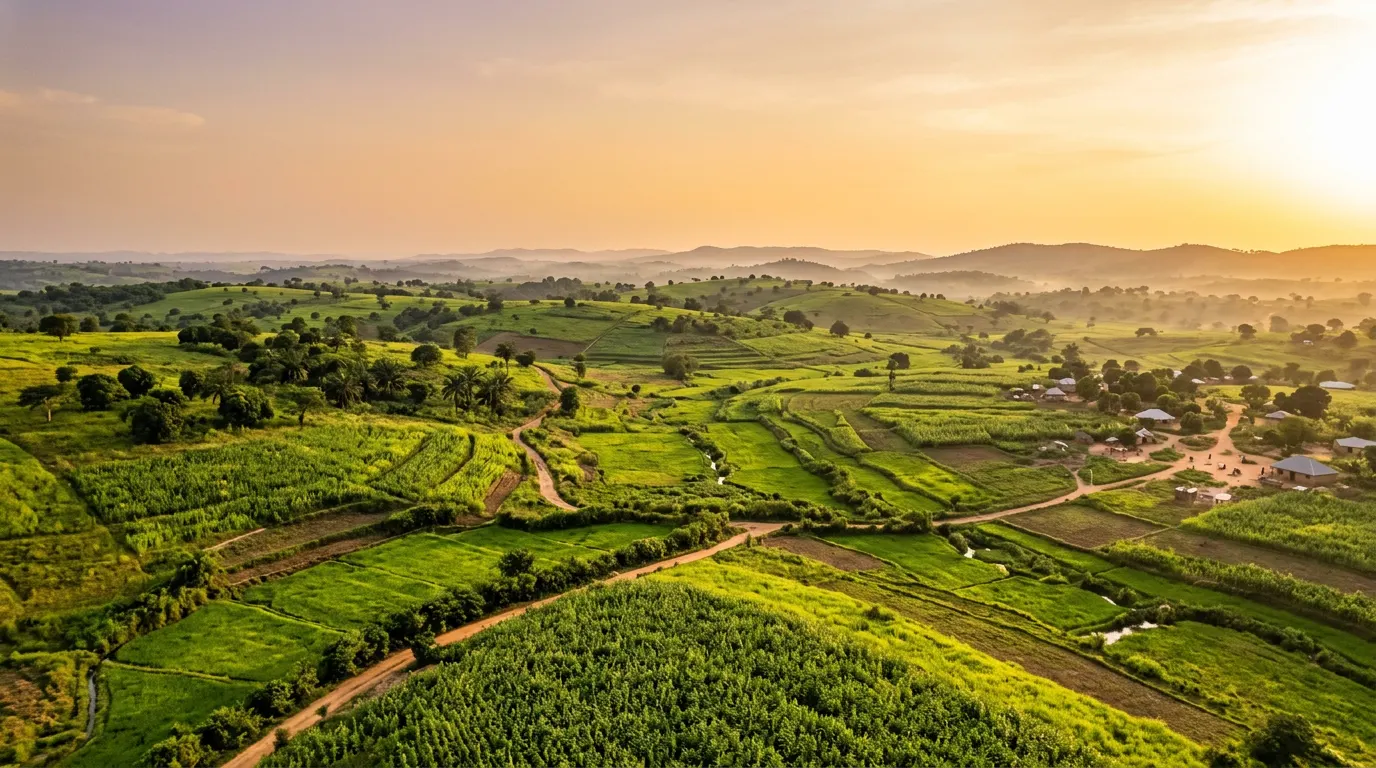
We develop projects that turn crop residues from Nigerian farms and processors into biochar — a stable form of carbon that can enrich soils and support credible carbon removal.
Carbon Bridge Africa is a Nigerian project development company building a bridge between agricultural communities, climate technology and the investment needed to turn farm residues into measurable environmental value.
Our work sits where agriculture, environmental management and climate finance meet.
Many crop residues are left to decompose or are burned in the open. We study where these materials arise and how they could be collected and used more responsibly.
Biochar is made by heating biomass with limited oxygen (pyrolysis). We are assessing technologies and sites suitable for producing quality biochar from local feedstocks.
Biochar can store carbon in a durable form. We aim to develop projects that meet recognised methodologies, so that any carbon removal can be independently verified.
A simplified view of the value chain our project is designed to develop.
Crop by-products from farms and agro-processors.
Responsible sourcing, aggregation and preparation.
Controlled conversion using suitable pyrolysis technology.
Potential soil application and verifiable carbon storage.
We are in the development stage of a project to assess agricultural residues, secure responsible feedstock, and evaluate converting that feedstock into biochar.
We are transparent about where we are. Our project page separates planned activities from completed achievements, and we will only report results once they have been achieved and documented.

We welcome conversations with investors, technical partners, research institutions and agricultural organisations.