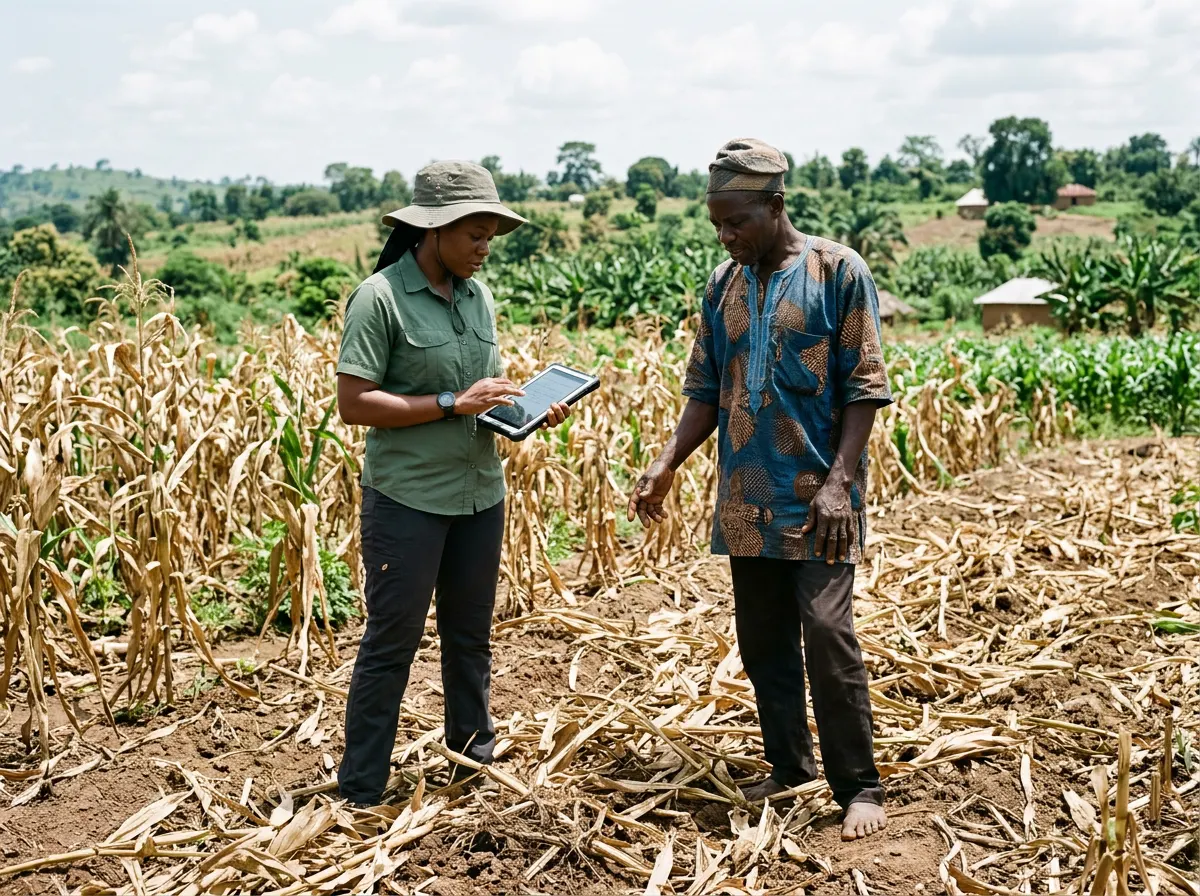
A careful, evidence-led development process
Every stage of our work is designed to answer a practical question before the next decision is made — reducing risk for communities, partners and investors.
Six stages, from field to feasibility
These stages often overlap, and findings at any stage may change the project’s design, location or scale.
Engagement with farmers and agricultural processors
Projects start with people. We engage early and openly with farmers, cooperatives, agro-processors and local leaders to understand how residues are currently used and what a fair partnership would look like.
- Community and stakeholder consultations
- Understanding existing residue uses, including livestock feed and soil cover
- Exploring fair, transparent supply arrangements
Biomass availability assessments
We assess the types and quantities of residues that could be sustainably sourced — accounting for seasonality, competing uses and the need to leave enough residue on fields to protect soil health.
- Crop and processing data review and field surveys
- Seasonal availability and logistics mapping
- Sustainable removal limits
Technical feasibility
We examine whether a biochar operation is practical at a given location — considering feedstock supply, infrastructure, energy, water, access, labour and operating costs.
- Site screening and selection criteria
- Supply chain and logistics modelling
- Preliminary technical and financial analysis
Technology evaluation
Pyrolysis technologies vary widely. We compare options on feedstock compatibility, biochar quality, emissions control, reliability, maintenance needs and suitability for local conditions.
- Review of technology providers and systems
- Feedstock testing and biochar quality analysis
- Emissions and safety performance
Environmental safeguards
We aim to avoid harm and manage risks from the outset, in line with Nigerian regulations and recognised international good practice.
- Environmental and social impact assessment
- Air quality, emissions and waste management planning
- Protection of food security and soil health
- Grievance and feedback mechanisms for communities
Carbon removal potential
We evaluate whether the project can deliver carbon removal that stands up to scrutiny — using recognised methodologies, conservative assumptions and independent verification.
- Methodology and registry review
- Measurement, reporting and verification (MRV) planning
- Life-cycle accounting of project emissions
How we work
Evidence first
Decisions are based on data gathered in the field and in the laboratory, not assumptions.
Community partnership
Farmers and processors are partners whose interests shape the project.
Integrity in claims
We report only what has been achieved and verified, and say clearly what is still planned.
Do no harm
Food security, soil health, air quality and local livelihoods come first.
Recognised standards
We design around established biochar and carbon removal standards.
Long-term thinking
Projects must be viable and beneficial over many years, not just at launch.
Bring your expertise to our process
We welcome technical specialists, researchers and agricultural organisations who can strengthen each stage of our work.